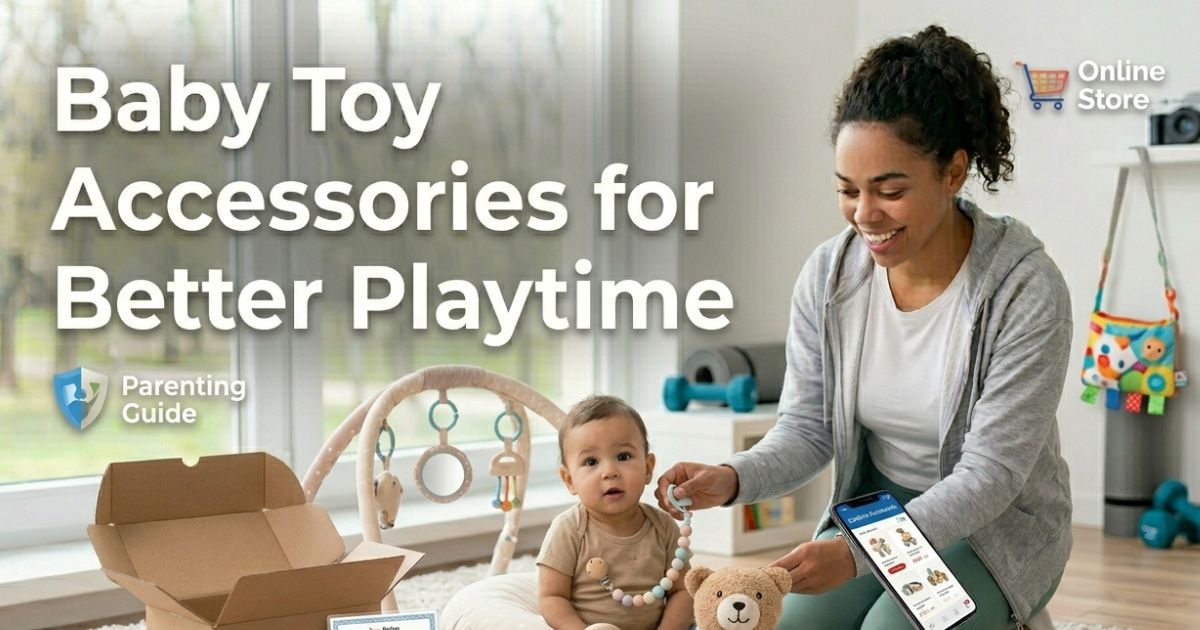
Babies learn through play, and the right baby toy accessories can turn every play session into a rich learning experience. From colorful rattles to pretend-play kits, accessories complement your baby’s main toys and environment to boost development. In this article we’ll define what baby toy accessories are, explore popular types (and example sets), and explain how they aid growth. You’ll find tips on choosing safe, educational baby toy accessories, ideas for colorful baby toy accessories, guidance on shopping (especially online), and suggestions of toy accessory sets ideal for infants and toddlers.
What Are Baby Toy Accessories?
Baby toy accessories are supplemental items that add variety and function to a child’s play. They can include extra parts for favorite toys or standalone pieces that encourage new activities. For example:
- Pretend-play accessories: Doll strollers, toy bottles, pacifiers, clothes, diaper bags, bath tubs and pretend kitchen sets are all accessories that let a baby imitate caregiving roles.
- Infant development toys: Rattles, teething rings, large beads, nesting cups, soft blocks and textured balls give babies objects to hold, mouth, and manipulate.
- Building and sorting sets: Stacking rings, shape sorters, magnetic letters, and simple puzzles introduce shapes, colors, and problem-solving. A baby toy accessories set might bundle blocks with matching shapes or numbers to make learning fun.
- Sensory and gym accessories: Play gyms and mobiles with hanging toys (rings, bells, mirrors) encourage reaching and visual tracking. These accessories often include bright colors and different textures to engage babies’ senses.
- Creative and musical items: Washable crayons, fingerpaints, soft crayons, xylophones and drums introduce art and music. Even simple accessories like building a makeshift drum (a bowl and a spoon) counts as an educational accessory.
By combining these kinds of items in a toy box, parents create a rich play environment. For instance, the National Association for the Education of Young Children (NAEYC) recommends that infants have “things they can reach for, hold, suck on, shake” (rattles, large rings, teething toys, soft dolls, textured balls) and for older babies “things to drop and take out” (plastic bowls, large beads, balls, nesting toys). Each of those items effectively serves as a baby toy accessory. Even everyday objects (clean containers, wooden spoons, cardboard shapes) can become accessories that entertain a baby safely.
Key Benefits of Baby Toy Accessories
Baby toy accessories are more than just extra playthings; they actively support growth across multiple domains. Well-chosen accessories can boost cognitive, motor, sensory, language, and social development:
-
Cognitive Development: Educational accessories engage a baby’s curiosity and thinking skills. As one parenting resource notes, “Educational baby toys are designed to engage your child’s cognitive abilities from an early age. They encourage exploration, problem-solving, and critical thinking”. For example, a simple shape sorter or puzzle teaches cause-and-effect and spatial reasoning. Hanging accessories on a play gym (like bells or movable toys) introduce cause-effect learning as babies discover that their movements produce sound or motion.
-
Hand-Eye Coordination & Motor Skills: Many accessories are designed for reaching, grasping, and manipulating. When a baby reaches for a dangling gym toy or a ring, they strengthen hand-eye coordination and fine motor control. As infants grow, pulling apart Velcro toys or stacking rings refines those skills. (Toddlers with building kits or interlocking blocks further develop finger dexterity and hand strength.)
-
Sensory Stimulation: Accessories rich in colors, textures, and sounds stimulate a baby’s senses. Bright, high-contrast toys capture a young infant’s attention when vision is still developing. Research shows “brightly colored toys also help babies develop their eyesight. Toys with bright and contrasting colors help maintain the child’s attention, encourage curiosity, and stimulate their developing visual acuity”. Likewise, varied textures (smooth wood vs. soft cloth) and gentle sounds (a wooden rattle vs. a squeaker) engage touch and hearing. For instance, a crocheted gym toy or a crinkle-textured ribbon not only encourages grabbing but also introduces sound and feel. Sensory accessories help newborns make sense of the world and foster neural development.
-
Language & Social-Emotional Skills: Pretend-play accessories (like dolls, toy telephones, or feeding sets) promote communication and empathy. When toddlers care for a doll, they often talk to it and practice naming objects. As one expert notes, using doll accessories “fosters empathy, creativity, and social competence in children”. Dressing a doll or pushing a toy stroller involves words like “hat”, “milk”, or “baby”, boosting vocabulary. Acting out routines (feeding, dressing) helps children learn social roles and responsibilities. In short, baby toy accessories for pretend play give parents a chance to introduce new words and model caring behavior.
-
Imagination & Creativity: Open-ended accessories (blank blocks, art materials, plain dolls) let babies invent their own games. Educational toys “nurture your baby’s creativity and imagination,” allowing them to explore without strict rules. A set of colorful wooden blocks can become anything from a car to a castle, depending on the child’s imagination. Even simple DIY accessories (cardboard hats or fabric scrap dolls) can spark creative play. These imaginative activities contribute to cognitive flexibility and problem-solving as your baby grows.
Overall, thoughtful accessories enrich every play session. A well-designed baby gym with a mix of wooden rings, hanging bells, and mirrors – as one source recommends – “stimulates their senses of touch, sight, and sound. As they reach out and grasp the hanging toys, they develop their sense of touch and learn about cause and effect relationships”. This is just one example of how accessories turn a toy into a learning tool.
Types of Baby Toy Accessories (with Examples)
Baby toy accessories come in many categories. Here are some common types and example sets that illustrate how they work:
-
Doll & Pretend-Play Accessories: These include doll strollers, cribs, high-chairs, baby carriers, play kitchens, toy telephones, and dress-up outfits. A “baby toy accessories set” in this category might bundle a baby doll with feeding bottles, a bottle warmer, diapers, and a toy piano. The BiBi Dolls guide notes that prams, bottles, clothes, and cots “add layers of realism” to play and help children emulate caregiving roles. For example, a 6-piece doll care set (with a carrier, bottle, blanket, and clothing) encourages nurturing play. These accessories teach responsibility (taking care of a “baby”) and fine motor skills (buttoning and snapping doll clothes).
-
Sensory & Play Gym Accessories: Play gyms, activity arches, and mobiles are classic baby accessories. They typically hang above a mat or crib, featuring rattles, mirrors, soft toys, and teether rings. As Jabaloo explains, “Baby gyms are essential tools in early childhood development… frameworks for hanging various accessories that stimulate different developmental skills – from visual tracking to motor coordination and cognitive understanding.”. Common accessories include black-and-white or colorful mob ile hanging shapes for newborn focus, jingle bells or crinkle toys for older infants, and wooden rings or fabric strips that babies can grab as they learn to sit up. A colorful baby toy accessory in this group might be a multi-colored teething ring, a plush hanging lion, or a soft mirror – all chosen to catch a baby’s eye and encourage batting or reaching.
-
Building & Manipulative Accessories: This covers blocks, stacking sets, puzzles, beads, and any accessories you assemble or stack. Examples: stacking rings, nesting cups, large floor puzzles, and block sets with wheels. An educational set could include numbered blocks plus shape cutouts to teach counting and geometry. NAEYC suggests giving older infants things like “large soft blocks and wooden cubes” and younger toddlers “cardboard and wood blocks”. These accessories improve spatial reasoning and problem-solving. For instance, a 10-piece wooden block set (with shapes and letters) lets toddlers build towers, sort by color, or spell simple words.
-
Creative & Artistic Accessories: These are art supplies and musical toys. Think large washable crayons, chunky paintbrushes, foam stickers, playdough tools, small keyboards or maracas. A “colorful baby toy accessories set” might include toddler-safe fingerpaints and a big sheet of paper, or a drum with a couple of drumsticks. These accessories nurture creativity. As infants grow into toddlers, items like crayons and washable markers encourage drawing, while xylophones and tambourines build rhythm skills.
-
Active & Outdoor Accessories: Items that encourage movement – balls, ride-on toys, push toys, tunnels. For baby play (0-2), accessories include soft play balls, a cloth tunnel, or a lightweight walker (for early cruisers). Older toddlers might enjoy a 3-wheel scooter or a trike (often sold as accessory-ready ride-ons). Even for seated babies, simple accessories like a plush swinging seat or an activity table with lever and button accessories count.
Each category above can appear as a standalone item or as part of a set. Shopping for “baby toy accessories set” often yields bundled kits (e.g., a puzzle + counting beads set). When choosing, consider mixing categories: a doll gear kit plus a building block set covers both pretend play and problem-solving skills.
How Baby Toy Accessories Boost Learning and Play
-
Enhancing Motor Skills: Every new accessory encourages different movements. Reaching for a hanging toy practices tracking and reaching; squeezing a sensory ball builds hand muscles. For example, wooden rings or soft beads hanging from a play gym make a baby reach upward and improve coordination. Montessori experts note that items in the 0-3 month stage (high-contrast mobiles, hanging discs) target visual focus, while 3-6 month accessories (wooden rings, fabric strips, lightweight balls) encourage intentional reaching.
-
Engaging the Senses: Accessories create a multi-sensory environment. An infant mobile with bold colors and gentle sounds stimulates both sight and hearing. Textured pacifiers or plush toys teach babies about touch. The Discovery Toys blog explains that bright, contrasting colors in accessories help babies focus their still-developing vision. In practice, a high-contrast black-and-white mobile for a newborn or a rainbow-colored ring toy gives visual stimulation, while crinkle and rattling parts offer auditory feedback. This sensory input is crucial: babies “take in external stimuli and begin to formulate how they interact and view their world”.
-
Learning Through Play: Accessories can directly teach concepts. For example, a stacking toy introduces counting (“one, two, three rings”), and shape-sorters teach geometry (matching square, circle, triangle). Sound-producing accessories (bells, shakers) demonstrate cause-and-effect and even early rhythm. The Jabaloo guide points out that “sound-producing accessories… support language development and teach cause-and-effect relationships”. So when a baby shakes a rattle and hears a sound, they learn actions have consequences. Similarly, toddler activity centers often have shape slots, levers, and puzzles that subtly teach problem-solving.
-
Encouraging Language & Social Skills: Many accessories open opportunities for parent-child interaction. While babies mouth a teether or stack a block, parents can narrate (“You grabbed the red ring!”). Doll accessories (bottles, clothes) prompt role-play: as parents model feeding or dressing a doll, children learn words and routines. The BiBi Dolls blog notes that role-playing with doll accessories “helps children understand the routines and responsibilities of caregiving”, building emotional intelligence. By naming colors, shapes, and body parts during play, you boost early vocabulary.
-
Building Confidence and Imagination: As babies succeed with accessories (fitting a puzzle piece or pulling a thread), they feel proud. Open-ended toys like blocks or art materials let children play freely, fostering creativity. The Mila Millie blog emphasizes that wooden baby gyms and similar toys “provide open-ended play that encourages imaginative thinking. Your baby can create stories, engage in pretend play, and develop their cognitive abilities as they explore”. Indeed, when a child uses a set of wooden fruit shapes as cars or uses a cardboard box as a hat, they’re practicing imaginative thinking – a foundational skill for problem-solving later.
-
Safety through Engagement: Surprisingly, giving babies safer accessories can also reduce anxiety and promote calm play. Montessori experts mention that babies who mouth toys get familiar with textures and even strengthen their immune systems (through exposure to non-toxic materials). Choosing safe, chewable accessories (like natural rubber teething toys) means babies can explore freely, gaining confidence without constant ‘no!’ from caregivers.
In summary, each accessory can serve a purpose. A brightly colored mobile isn’t just decoration – it strengthens a baby’s vision and focus. A plush stacking toy isn’t just something to grab – it hones fine motor skills and introduces early math. When shopping or selecting accessories, consider the skill or sense each item promotes.
Safe Baby Toy Accessories: Safety Tips
Safety must come first with any baby plaything. Here are key guidelines to ensure your baby toy accessories are safe:
-
Check for Non-Toxic Materials: Always choose accessories made of non-toxic materials. Look for wooden, silicone, or cloth toys painted or dyed with water-based, lead-free paints. Reputable brands will advertise that materials are BPA-free, phthalate-free, and meet safety standards. Avoid toys with cheap plastic or painted parts that might contain heavy metals. In fact, U.S. authorities have warned that lead paint on toys can cause poisoning; one report cited over 1,000 incidents of lead poisoning from toy paint. Stick to accessories clearly labeled as baby-safe.
-
Watch Out for Choking Hazards: Accessories must be large enough and secure. “Safe baby toys are toys of the appropriate size, features, and material,” notes one safety guide. Avoid any accessory with small loose parts (buttons, beads, eyes) for babies under 3. A good rule: anything smaller than a ping-pong ball is unsafe for a crawling baby. If the accessory has pieces that attach (like a mirror or rattle to a gym), ensure they lock firmly. Check for sharp edges or points, even on plastic or wooden items. Sand down splinters or discard cracked pieces immediately. Many plastic toys break into unsafe shards; by contrast, smooth wooden toys are preferred.
-
Age-Appropriate Design: Follow age recommendations on packaging. Choose toys that match your child’s developmental stage. For example, toys labeled 0–6 months typically have no small parts and are designed for lying-down or gentle sitting play. As babies grow (6–12 months), accessories often have more to grasp and discover. For toddlers, accessories will be more interactive (like puzzles or marker sets). Using accessories meant for older children can introduce hazards. The ASTM F963 toy safety standard (required by U.S. law) specifically forbids hazardous small parts for children under 3.
-
Certifications and Quality: Where possible, choose brands or stores that follow safety certifications (ASTM, EN71, CPSIA compliance). While all toy manufacturers should comply, reputable retailers often mention safety testing. If buying online, check that the product description cites compliance or testing. You can often find test reports or certificates for well-known brands. Remember: the U.S. CPSC mandates third-party testing for children’s products.
-
Avoid Loose Cords & Small Loops: Accessories like crib toys or stroller toys should have no long straps or cords. Straps longer than 7 inches can pose strangulation risks. (This also applies to pacifier cords or jewelry – keep any cords short and inaccessible.)
-
Ease of Cleaning: Babies put everything in their mouths. Pick accessories that are easy to wash (washable fabrics, wood that can be wiped down, silicone that can be sanitized). Avoid toys that cannot be cleaned, as they can harbor germs.
-
Buy from Reputable Sources: Especially with “baby toy accessories online,” shop from trusted stores with good return policies. Read customer reviews to spot any safety issues or defects. Local boutiques or established brands often have stricter quality control than bargain imports. As Montessori parenting advice suggests, look for stores or brands with “years of proven track records” and no history of recalls.
Following these tips will help ensure that your baby’s accessories are not only fun but also safe. For example, experts highlight wood as a safe material: “Wooden toys are not only the safest option from a toxicity point of view, but can also be sculpted to have a smooth surface and no sharp edges”. In contrast, cheap plastic toys are often avoidable because they “contain toxic heavy metals”. Whenever in doubt, refer to official safety guidelines and prioritize non-toxic, age-appropriate accessories.
Choosing Educational Baby Toy Accessories
Many baby toy accessories on the market are explicitly designed to be educational. When shopping, look for items that incorporate learning elements:
-
Shapes and Letters: Shape-sorters, puzzles, and building blocks can introduce geometry and early literacy. A baby toy accessories set might include large wooden letter blocks with the alphabet printed on them, or a number puzzle. These toys subtly teach shape recognition and sequencing.
-
Colors and Patterns: Accessories that come in rainbow colors or black-and-white high-contrast patterns help babies learn colors and visual discrimination. For instance, high-contrast Montessori mobiles (black/white/red) support newborn visual focus, while later accessories use a full color palette. A multicolored xylophone (as seen above) or stacking cups in bright hues make learning color names a playful activity.
-
Music and Math: Instruments (like drums, xylophones, bells) are both fun and educational. They teach patterns and cause-effect (beat the drum, it makes a sound) and can even be used for counting rhythms or learning loud/soft. An accessory set that includes a mini keyboard and a set of music cards introduces basic notes and following instructions.
-
Practical Life Skills: Kitchen playsets and cleaning kits (play vacuum, toy dishes) teach daily routines. When children mimic real tasks with these accessories, they practice sequencing and vocabulary (cups, plates, “wash”, “clean”). For very young babies, simple cause/effect toys (like a bath toy that squirts water) teach the concept of action and reaction.
-
Social & Emotional Learning: Doll and puppet accessories continue to be educational. Even from infancy, describing doll care (“You’re feeding baby!”) teaches language and empathy. Many educational sets include storybooks or activity cards, turning playtime into a storytelling session that boosts comprehension.
By choosing accessories with built-in learning goals, you turn play into education. Manufacturers often label these products as “educational toys,” but parent reviews can also guide you. For example, one blog notes that educational baby toys “provide a stimulating environment for your baby to observe, interact, and learn… encouraging the development of hand-eye coordination and fine motor skills”. Keep an eye out for terms like “STEM”, “Montessori”, or “developmental” when browsing for accessories.
Colorful Baby Toy Accessories
Vibrancy matters for babies. Colorful baby toy accessories are not just pretty; they serve a purpose. Infants are naturally drawn to bright, high-contrast colors. Research confirms that offering colorful toys can boost sensory engagement: “Every new color, texture, or shape is unique to [babies] and can shape how they interact with their environment… By giving them toys that vary in colors, you give them the chance to learn new things and make new connections”. In practice:
- Visual Tracking: A brightly painted mobile or a row of rainbow stacking rings helps an infant practice following objects with their eyes. Over time, this improves focus and visual acuity.
- Interest & Focus: A multicolored toy (like a xylophone or bead maze) will hold a baby’s attention longer than a plain one. Discovery Toys points out that contrasting colors “provide [babies] with something to focus on… and help maintain the child’s attention”.
Colorful toys, like this vibrant xylophone, naturally engage babies’ senses and curiosity. Bright hues help babies focus and learn more effectively.
- Emotional Engagement: Warm bright colors (reds, yellows) can energize a baby, while soft pastels can soothe during calming play. Mixing both types offers variety.
- Gender-Neutral Stimulation: Rather than sticking to gendered pinks or blues, choose rainbow-colored or black-white sets. All babies benefit from color variety.
When assembling accessories, aim for a palette. For example, a rainbow play mat with matching toys, or a set of five blocks each a different color, will naturally introduce color names and contrasts. Even simple household items can be turned colorful: tie bright ribbons onto rings, or paint safe wooden blocks. The key is variety – the more colors and patterns a baby sees, the richer their learning environment.
Baby Toy Accessories for Toddlers (1–3 Years)
As babies grow into toddlers, their play becomes more complex. The best accessory kits evolve with them. For toddlers, consider:
-
Advanced Building Kits: Toddlers can handle smaller blocks, snap-together sets, and 4–12 piece puzzles. Accessories like Toddler block sets (smaller than infant blocks) challenge developing hands. NAEYC notes that two-year-olds enjoy “blocks that snap together” and “things to solve problems – wood puzzles (4 to 12 pieces)… objects to sort (by size, shape, color)”*. A 20-piece wooden alphabet puzzle or a simple shape-sorter ball is a perfect accessory at this age.
-
Pretend-Play Expansions: Dress-up clothes, play kitchen food sets, and doll accessories remain popular. For example, giving a toddler a baby doll with a full accessory set (bottle, pacifier, blanket) encourages nurturing play. The NAEYC list for 2-year-olds explicitly mentions “dolls with accessories, puppets, and play food”. Even toddler-sized furniture (toy chairs, a mini playphone) counts as an accessory that enriches pretend play.
-
Artistic and Musical Tools: Fine motor skills are stronger now, so toddler art accessories (washable markers, scissors with rounded tips, stamps) are suitable. Musical toys can be more interactive too: toy keyboards, singing stuffed animals, or CD/MP3 players with child-friendly music. The NAEYC guide suggests things for creative play like “large and small crayons and markers, large paper for drawing, (and) instruments – xylophones, maracas…” for 2-year-olds.
-
Active Equipment: Many toddlers enjoy accessories that allow movement: ride-on toys, small balls, and simple sports play (like plastic bowling sets). A starter tricycle or a colorful tunnel are examples. These accessories support gross motor development (walking, throwing, kicking) and social play (playing catch).
When selecting toddler accessories, ensure they are sturdy and sized for older kids. Look for label ages 2+ or 3+ when in doubt. Some accessories have built-in growth: height-adjustable drawing easels or stacking toys that work for years to come. By the toddler stage, the line between a ‘toy’ and an ‘accessory’ blurs, but the idea is the same: each item should add something new. For example, adding a “stacking pegboard” accessory to a toddler’s collection can teach patterns and counting, while a “pretend food set” expands their kitchen play.
Buying Tips & Where to Find Baby Toy Accessories Online
Finding the right accessories is easy if you know where to look. Many online retailers specialize in baby toys and accessories: from big marketplaces to boutique sites. Here are some shopping tips:
-
Use Keyword Combinations: Search online for terms like “educational baby toy accessories” or “wooden baby toy accessories set.” For example, filtering on “baby toy accessories online” often brings up curated kits (like Montessori play gyms or doll care sets). Check large retailers (Amazon, Walmart, Buy Buy Baby) as well as specialty eco-toy shops. Specialty stores might label products with certifications (non-toxic, organic) and often carry unique sets.
-
Read Reviews and Ratings: Before buying an accessory set online, read customer feedback to catch any hidden issues (choking hazards, poor durability, etc.). Reviews often mention if an item is truly age-appropriate or if it contains any concerns. This is especially important for unbranded or imported products.
-
Compare “Accessories Sets”: Many manufacturers sell accessories in bundles. For instance, a 10-piece Montessori wooden toy set might include shape sorters, stacking blocks, and puzzle pieces together. Buying a set can be more cost-effective than single items, and the pieces are usually designed to complement each other. Look for packs like “baby gym accessory kit” or “doll accessory set” to get multiple items at once.
-
Check Safety Certifications: On product pages, look for mentions of ASTM F963 compliance, CPSIA, CE mark, or BPA-free labeling. Even if not explicitly branded, reputable retailers will often highlight safety standards. For secondhand or imported goods, be extra cautious if a listing has no safety info, it’s better to skip it.
-
Age Filters & Categories: Use website filters to narrow down age range. Most online shops allow you to select the child’s age or skill level. Use this to avoid accidentally buying baby accessories that are too advanced or too simple.
-
Trusted Brands and Eco-Labels: Some brands are known for quality baby accessories (e.g., Hape, PlanToys, Fisher-Price for basics, or smaller eco-brands for wooden toys). Sites like BeelikeKids recommend wooden, sustainable options and advise avoiding plastic sets with unknown origins. If you prefer eco-friendly choices, look for labels like “sustainably sourced” or “organic cotton”.
-
Return Policy and Customer Service: Since baby accessories get lots of use, choose retailers with good return policies or satisfaction guarantees. If possible, buy from stores that let you return or exchange defective items.
When shopping baby toy accessories online, use all the tools at your disposal. Compare prices across sites, but don’t sacrifice quality for a tiny discount. Remember that a safe, well-made accessory may cost a bit more but will last longer and protect your child. Many online customers also bundle shipping – so adding a few accessories to one order can save on cost.
Pro Tip: Sign up for email alerts or newsletters from toy retailers. They often announce new accessory sets, seasonal discounts (e.g., “back to school” art kits or holiday-themed doll sets), and parenting tips.
Conclusion
Baby toy accessories make playtime richer and learning more fun. By choosing a variety of safe, age-appropriate items doll kits, stacking toys, activity gyms, and more you ensure your baby’s play develops creativity, motor skills, and curiosity. Remember to prioritize safety: select non-toxic materials, avoid small parts, and follow age guidelines. Look for educational baby toy accessories (like blocks, puzzles, and art supplies) to sneak in learning, and don’t forget the power of colorful accessories to capture your baby’s attention.
With these tips, you can shop confidently. Consider browsing some of the recommended baby toy accessories sets that combine learning elements in one package. Whether you shop in-store or buy baby toy accessories online, use reviews and safety labels as your guide. Ultimately, the best accessory is the one that inspires you and your child to play together.
Upgrade your little one’s playroom today with carefully chosen accessories and watch their imagination and skills blossom. (And don’t forget to have fun alongside them!)