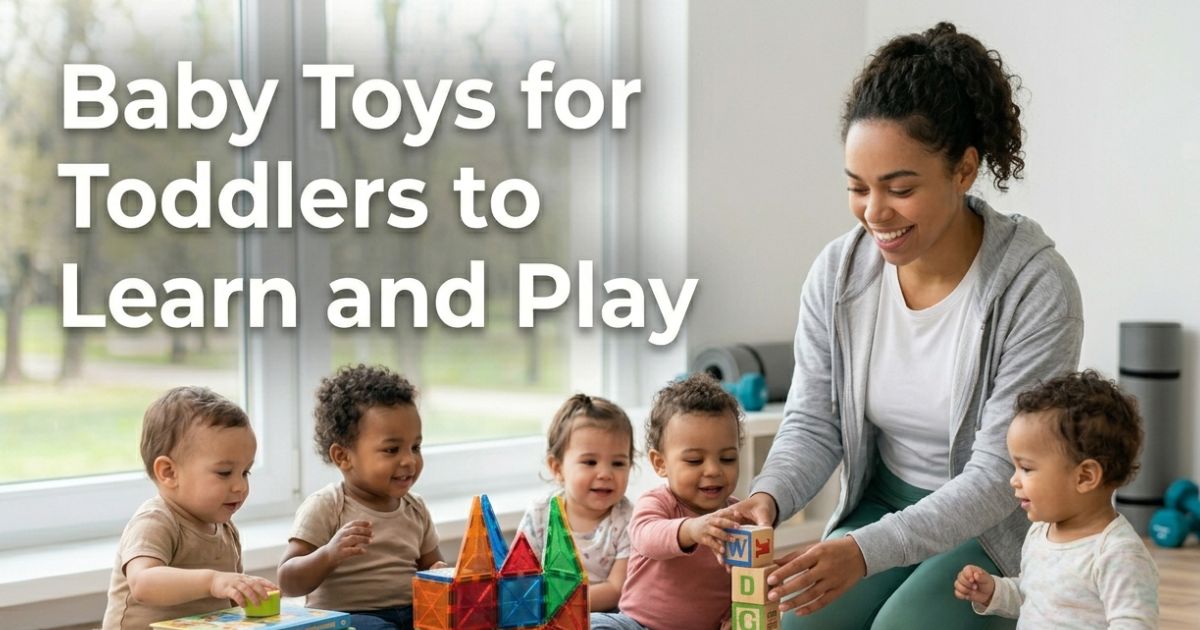
Choosing the right baby toy for toddlers can turn playtime into a fun learning experience. Toddlers explore the world through play, building skills by interacting with toys. Studies show that educational toys have “huge effects on a toddler’s development,” helping them master concepts like language, problem-solving, and motor skills. In this guide we cover the best baby toy for toddlers – from educational baby toys and interactive baby toys to safe toys – so parents can pick fun, developmentally-appropriate options. We explain why toys matter, list popular categories (blocks, puzzles, pretend-play sets, etc.), and give tips to choose toys that support toddler learning and growth.
Why Toddler Toys Matter for Learning
Toddlers are naturally curious and active. They use toys to “test things out,” stack and sort objects, and copy adults. Through these activities, they develop critical skills:
- Cognitive skills: Sorting, matching and puzzles help toddlers build memory, reasoning and problem-solving abilities. For example, fitting shapes into a sorter or completing a simple 2–5 piece puzzle teaches cause-and-effect and logical thinking.
- Language and communication: Books, interactive story toys, and toys that encourage talking help grow vocabulary. Playing with storybooks or talking dolls “foster vocabulary and comprehension,” which boosts early language development. Toddlers also begin to use words and gestures as they play, often narrating what they’re doing.
- Motor skills: Manipulating toys like blocks, chunky crayons, or playdough refines fine motor control and hand-eye coordination. Seattle Children’s notes that toddlers “like to dump, push and pull, turn, knock down, [and] stack things up”. These motions strengthen tiny hand muscles and improve coordination. Large push-toys, balls, and ride-ons build gross motor skills (walking, running, balancing).
- Social-emotional development: Pretend-play toys (dolls, stuffed animals, kitchen sets) let toddlers imitate real-life roles, which helps them learn empathy, sharing, and self-regulation. Playing “house” with a doll or caring for a stuffed animal builds social skills and emotional understanding.
According to child development experts, play is how children “make sense of the world.” Educational toys go further by intentionally challenging toddlers while entertaining them. Forbes Advisor explains that stacking blocks, reading books together, and exploring physical toys (rather than screens) help children develop cognitive and motor skills as well as critical thinking. In short, thoughtfully chosen toys become tools for learning and play.
Key Benefits of Educational Toddler Toys
- Supports Developmental Milestones: A good baby toy for toddler development is designed to meet the child’s current stage. For example, shape sorters and wooden puzzles (with 2–4 pieces) boost spatial reasoning, while crayons and large paper encourage early creativity. NAEYC notes that age-appropriate toys like board books, musical toys, and stacking blocks are “good choices” for one-year-olds.
- Engages Multiple Senses: Educational toys are often multi-sensory. Toys with different textures, colors, sounds and movements keep toddlers engaged. For instance, sensory toys like textured balls or water tables let children touch, shake, or listen, which reinforces learning through exploration.
- Encourages Independent Play: Simple, safe toys invite toddlers to play on their own. As Busy Toddler blogger Susie Allison points out, even babies benefit from “safe, engaging objects to explore on their own” (open-ended toys) which lay the foundation for independent play later. Providing a few high-quality toys (rather than a cluttered toy bin) helps toddlers focus, practice self-entertainment, and build confidence.
- Builds Creative and Critical Thinking: Many toddler toys offer open-ended play. Building sets, simple art supplies, and dress-up props allow children to invent their own games. This kind of play “sparks curiosity and creativity,” helping toddlers experiment and solve problems. For example, when a child fits a piece into a puzzle or decides how to use a block tower, they are learning perseverance and reasoning.
By choosing toys with these benefits in mind, parents support their toddler’s learning through fun. As a bonus, playing together with educational toys also strengthens parent-child bonds. Forbes notes that parents joining in (“play with your child whenever possible”) enriches any toy’s value.
Types of Top Baby Toys for Toddlers
Toddlers thrive with toys that match their growing abilities. Below are popular types of baby toys for toddlers, with examples and benefits. Each category offers something unique for learning and play.
1. Building & Stacking Toys
Blocks and stacking toys are classic toddler favorites. Large, interlocking blocks (like Duplo or Mega Bloks) and wooden block sets let toddlers build towers and structures. Why they’re great: Stacking and sorting blocks improve spatial reasoning and fine motor skills. Seattle Children’s recommends “solid wooden blocks” and “large, hollow building blocks made of cardboard or plastic” for toddlers. These encourage problem-solving as toddlers figure out balance and structure. Blocks also foster creativity – a few pieces can become anything in imaginative play (a wall, a car ramp, etc.).
Building blocks and shapes help toddlers learn size, color, and coordination while stacking and sorting.
Tips: Ensure blocks are large (well above the choking-hazard size of a toilet paper roll). Smooth wooden blocks with non-toxic paint are durable and safe. Look for sets with a variety of shapes (cubes, cylinders, arches) to introduce basic engineering and math concepts.
2. Shape Sorters & Puzzles
Simple puzzles and shape sorters are ideal educational baby toys for toddlers. These usually involve fitting pieces into matching holes or assembling a few-piece jigsaw. For example, wooden shape sorting cubes (with removable lids) and knobbed wooden puzzles (2–5 pieces) are designed for young toddlers.
-
Developmental benefits: Sorting shapes and completing puzzles strengthens hand-eye coordination and reasoning. As Covenant Schools notes, toddlers “thrive from puzzles, stacking toys, and pretend-play items that support language development and imagination”. When a child matches shapes or colors, they learn problem-solving and concepts like size and shape. The satisfaction of fitting the last piece correctly also builds patience and confidence.
-
Examples: 2-piece peg puzzles or chunky knobbed puzzles with a few pieces are perfect at age 1–2. At 2–3 years, puzzles can have up to 10 pieces. Seattle Children’s suggests starting with pre-puzzles (2–3 pieces) around 18 months and moving to 4–6 piece puzzles by age 2½. Shape sorters (like rings on a pole or animal-sorting boxes) help toddlers understand cause and effect as pieces only fit certain ways.
Tips: Choose sturdy puzzles with large wooden knobs or pegs that toddlers can grasp. Ensure there are no loose small parts. Simpler puzzles keep frustration low and learning high.
3. Pretend-Play Toys
Pretend or role-playing toys spark imagination. Think of anything that lets a toddler imitate daily life or fantastical scenarios: toy phones, play kitchen sets, dolls with accessories, dress-up clothes, doctor kits, toy cars and trucks, puppet theaters, etc.
-
Developmental benefits: These toys enhance social-emotional and language development. NAEYC lists baby dolls, plastic animals, and plastic/wood “realistic” vehicles as great for one-year-olds. Seattle Children’s also recommends dress-up clothes, puppets, and play sets (farm, garage, etc.) for toddlers. By acting out roles (pretending to cook, driving a car, or caring for a doll), children practice language, empathy, and understanding routines. It also encourages cooperative play when kids play together, which builds sharing skills.
-
Examples: A sturdy toy kitchen with pretend food, a doctor kit with plastic bandages, or a stroller and doll can be hits at this age. Even simple props like a pretend phone or grocery cart can delight toddlers. For boys and girls alike, toy cars, trains, and building a cardboard “fort” can be exciting.
Tips: Look for pretend-play toys that are simple and durable. Clothing for dress-up should be washable. Toys that double as furniture (play tables) or sets of pieces (like play food) encourage group play and storytelling.
4. Musical & Creative Toys
Music and art toys engage toddlers in sensory and creative play. Examples include toy drums, xylophones, maracas, and simple keyboards; as well as art supplies like big crayons, washable paints, and Play-Doh.
-
Developmental benefits: Musical instruments promote auditory skills, rhythm and cause-and-effect. When a toddler shakes a rattle or taps a drum, they learn that their actions produce sounds. NAEYC suggests large non-toxic crayons, markers, and large paper for toddlers who can start scribbling. Mess-free art (like chunky crayons or bath paints) encourages creativity and fine motor control.
-
Examples: A small keyboard that plays notes when pressed, or a hand drum, can be both fun and educational. Musical toys often have age labels (e.g., “12M+”) and built-in volume limits. For art, safe fingerpaints or a chalkboard let toddlers explore color and movement.
Tips: Ensure art supplies are labeled “washable” and “non-toxic.” Always supervise any toy that makes noise to keep volume safe. Encourage creative expression (even scribbles and dance moves!) alongside the music.
5. Active & Outdoor Toys
Toys that get toddlers moving are crucial for physical development. These include balls, tricycles or balance bikes, riding toys (push cars), tunnels, slides (low, soft), and push/pull toys.
-
Developmental benefits: Such toys build gross motor skills, balance and coordination. Seattle Children’s recommends push-and-pull toys for walkers, small rockers, and ride-on toys (foot-powered, no steering) for older toddlers. Kicking a ball helps with coordination, while climbing in a foam tunnel or riding a little scooter improves balance. Active play also strengthens muscles and supports healthy growth.
-
Examples: A sturdy plastic ride-on car, a small slide, or a set of cones to run around are all fun for toddlers. A low tricycle with a parent push handle can work when they’re nearly 3. Even a big beach ball or a small jump rope can encourage active play.
Tips: Always supervise outdoor or active play. Use safety gear (helmets for trikes) and choose soft-surface play areas when possible. Avoid toys with sharp parts or breakable pieces outdoors.
6. Interactive or Electronic Toys (Use Sparingly)
Some toddler toys have buttons, lights or simple electronics (talking books, music gadgets, counting toys). These can be engaging when used appropriately. For example, an electronic alphabet toy might speak letters, or a pop-up toy might make sounds.
-
Developmental benefits: Interactive toys respond to a child’s actions, which can teach cause-and-effect and keep toddlers interested. Covenant Schools explains that “interactive educational toys encourage children to actively participate” with lights, sounds or movement. A talking alphabet toy can link letters with sounds, and a simple coding robot can introduce sequencing.
-
Cautions: However, experts advise prioritizing screen-free, hands-on toys whenever possible. Too much screen time (even on electronic toys) can distract from creative play. Interactive toys should be safe and age-appropriate – many cautionary labels say “Ages 3+” for electronics. Always ensure batteries are secure and look for “UL Approved” on electronics.
-
Examples: Electronic puzzle mats that play sounds, or a light-up counting toy, can be used in moderation. But also offer non-electronic alternatives (like a plush book instead of a tablet).
Tips: Choose simple interactive toys (e.g. a musical toy or light-up shape sorter) over complex screens. Check the toy’s recommended age and “repeat play” value. If choosing an app-enabled toy, set strict time limits.
How to Choose the Best Baby Toy for Toddlers
With so many options, these tips can help pick top-quality toddler toys:
- Match Age and Skill: Always check the age label. For example, avoid giving a 1-year-old a toy labeled 3+ (it may have small parts). The toy should be just challenging enough. As Forbes Advisor recommends, “focus on matching an educational toy to their current age and developmental stage”.
- Prioritize Safety: Choose toys made of non-toxic materials (no lead paint, phthalates, PVC or BPA). Seattle Children’s advises picking natural materials (wood, cotton) and non-toxic art supplies. Avoid any toy with removable small parts, button batteries, magnets, or long strings (longer than 7 inches). Check that fabric toys are washable and that all paint and finishes are child-safe.
- Durability and Cleanability: Toddlers play rough. A good toy should withstand chewing, banging and repeated use. Wooden or heavy-duty plastic toys last longer than flimsy ones. Also, easy-to-clean surfaces matter for hygiene.
- Engagement and Open-Endedness: The best toys are often simple and versatile. A good educational baby toy for toddlers is one they can use in multiple ways. For example, wooden blocks have no single “correct” use; your child can build, stack, or use them as pretend objects. Toys that encourage imagination (plain figures, dolls without too many accessories) offer more learning opportunities than overly prescriptive toys.
- Rotate Toys: Instead of giving toddlers dozens of toys at once, rotate a small set. This keeps interest high with “new” toys and prevents overload. Busy Toddler suggests that toddlers benefit from “a handful of thoughtfully chosen items” rather than a cluttered room.
- Read Reviews and Recalls: Before buying, check consumer reviews and CPSC recalls. For example, many retailer sites list age ranges and dimensions. The U.S. Consumer Product Safety Commission website lists recalled toys – use it periodically to ensure safety.
Safety Guidelines for Toddler Toys
Safety is paramount. Here are key safety points, many highlighted by Seattle Children’s Hospital:
- Choking Hazards: Never give a toddler a toy or part that can fit through a toilet paper tube (about 1.5 inches in diameter) this is the standard choking test. Soft toys should be large and without detachable small pieces. For example, a bead on a string or a small eyes on a stuffed animal should be securely fastened or avoided.
- Materials & Paint: Only buy toys with non-toxic labels. Avoid plastic toys with recycling codes #3, #6, or #7, as they can contain harmful chemicals. Old or antique toys with chipped paint are especially risky (lead paint). Opt for wood or BPA-free plastic. Make sure art supplies (crayons, paints, markers) are labeled non-toxic.
- No Sharp Edges or Points: A toddler’s skin and eyes are sensitive. Toys should have smooth edges and no splinters or sharp corners. Avoid any metal or glass parts on toddler toys. If wooden toys wear down, sand rough spots smooth.
- String and Cord Length: Any strings, cords or straps on toys must be shorter than 7 inches to prevent strangulation. Never tie strings to cribs or strollers. Remove or shorten cords on toys that could wrap around fingers or neck.
- Electrical Safety: If a toy has electrical parts, ensure it’s “UL Approved” for children. Electrical toys should have secure battery compartments that require a screwdriver to open (to prevent swallowing batteries). Always replace batteries promptly and dispose of old ones safely. Never let toddlers play with broken electronic toys.
- Magnets and Batteries: Toys with loose magnets are extremely dangerous if swallowed (they can attract inside the body). Keep magnet sets out of reach. Also, button/coin batteries are choking and chemical hazards. If ingested, they can burn tissue. Choose toys without accessible button batteries.
- Regular Inspection: Check toys often. Throw out anything broken or worn (a cracked wooden block, a torn stuffed animal, a tangled string). Old paint on toys can hide lead, and batteries can leak.
By following these guidelines and choosing age-appropriate toys, parents ensure playtime is both fun and risk-free. Remember the rule of thumb: “age-graded” means the toy’s safety and design match the child’s developmental level.
Conclusion
Every toddler deserves toys that are fun, safe, and enriching. By choosing the best baby toy for toddlers whether it’s a colorful shape sorter, a cuddly doll, or a set of wooden blocks parents can support their child’s learning and play. The ideal toddler toy will be age-appropriate, durable, and offer open-ended play that grows with the child. It will help build motor skills, language, creativity, and confidence.
In summary: look for educational and interactive features (letters, music, cause-and-effect), but keep safety first (no small parts, non-toxic materials). Rotate toys to keep play fresh, and always engage with your toddler during play. Happy playtime is learning time! If you found this guide helpful, share it with fellow parents and explore some top-rated toddler toys from trusted retailers. Encourage your little one to learn through play – it’s the best way to set up a toddler for a lifetime of curiosity and discovery.